Start with the intended game
Pool, snooker and carom share a demand for a dependable surface, but their tables are not interchangeable products. Bed size, rail geometry, pockets or their absence, and installation practice belong to the game being specified. Before asking about a quarry, establish the playing format and whether competition specifications actually apply to your room. A domestic table may be entirely suitable without being represented as tournament equipment.
The World Pool-Billiard Association publishes equipment specifications for pool, including a minimum slate thickness of 1 inch for the tournament tables described there. Treat that as a defined requirement, not a universal promise of quality. The World Professional Billiards and Snooker Association provides a different rules context for snooker. The Union Mondiale de Billard governs carom. Referencing the correct organisation prevents one discipline’s familiar measurements being casually transferred to another.
Read provenance without mythology
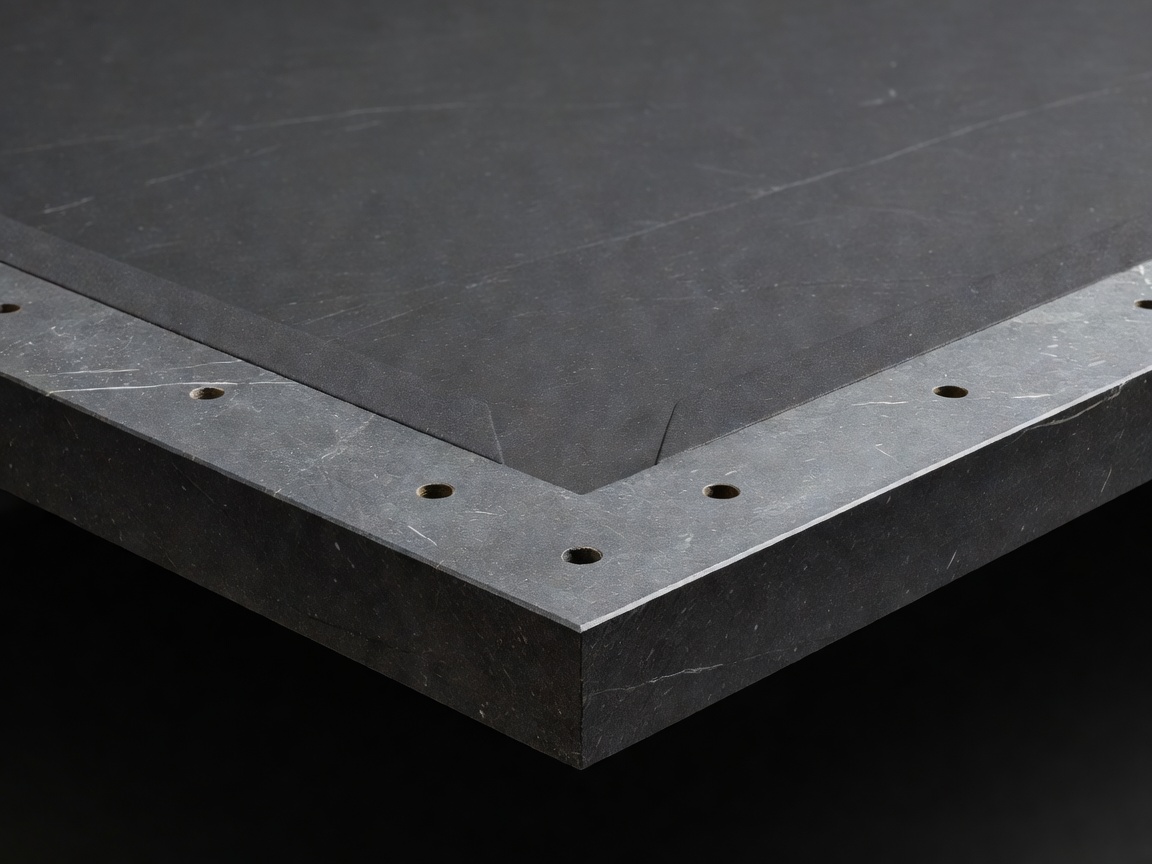
Slate is a natural stone with a layered geological structure. The useful questions concern how a particular set has been selected and processed: consistency of thickness, condition around holes and pockets, integrity of the edges, and the maker’s inspection method. “Italian slate” or “Brazilian slate” is a provenance description, not a complete acceptance test. Neither country name tells you the final condition of a bed delivered to your home.
Lavagna in Liguria has a long association with slate, while the slate landscapes of Gwynedd in Wales demonstrate how varied the material’s historical uses can be. Those places are useful context, not a ranking system. Ask the supplier for the actual bed specification and its documented checking procedure. Distinguish quarry origin from where the material was machined, matched into a set and assembled into the finished table.
Understand sections and support
A one-piece bed eliminates inter-section seams but can complicate carrying, lifting and access through a building. A sectional bed divides the handling task, then asks the installer to make several surfaces behave as one. More sections do not automatically mean inferior play. They mean more interfaces requiring sound support, alignment and a compatible seam treatment. The construction method should suit both the table and its delivery route.
Look below each joint. A seam should not be expected to bridge an unsupported gap by the strength of filler alone. Ask where the slate bears on the frame and how the installer controls relative height between neighbouring pieces. Also establish how pocket cut-outs and fixing holes relate to the rail system. A replacement piece that appears close in outline may still be incompatible with the original set.
Specify what can be checked
Thickness and mass influence the engineering and handling plan, but neither substitutes for a flatness check. A heavier bed also asks more of its frame and floor. Have the supplier state the measurement method and any applicable tolerances in writing, rather than accepting a vague claim that the stone is “perfect.” A precision straightedge, suitable gauges and an appropriate level answer different questions; a casual ball roll cannot replace all three.
Inspect delivery access before committing. Stair turns, door openings, lift capacities and the strength of the route can determine whether a proposed bed is practical. Do not improvise lifting arrangements around a finished stone slab. The installer should plan handling and assess the support requirements; a structural professional may be needed where floor capacity is uncertain. Keeping that planning separate from furniture styling avoids expensive surprises after manufacture.
Finally, ask how the bed could be serviced. Can the rails and cloth be removed without damaging the decorative enclosure? Is a matched slate set available if a section breaks? What happens to seams after a move? A luxury commission should make those questions easier to answer, not hide them beneath a finish. Continue to leveling once the stone is understood: a well-selected bed still depends on the plane created beneath it.
Sources and further reading
- World Pool-Billiard Association: equipment specifications
- World Professional Billiards and Snooker Association
- Union Mondiale de Billard
- UNESCO: The Slate Landscape of Northwest Wales
Standards apply within their stated scope. Confirm the current specification for the intended event or table.