Trace the real load path
Begin at the slate and follow its bearing surfaces down to the floor. The members you encounter are the ones that deserve structural questions. An ornate exterior may enclose a separate chassis; a visually spare table may rely on a deep concealed frame. Neither arrangement is inherently better. What matters is whether the actual supports, joints and leg connections have been designed to work together under the bed’s load.
Ask the maker to distinguish structural rails from decorative aprons. Find out where crossmembers sit, how the legs attach and how the assembly resists racking: the tendency of a rectangular frame to distort sideways. A photograph of polished corners rarely answers those questions. A simple underside drawing can be more revealing, especially when it identifies which pieces are fixed permanently and which can be removed for transport or maintenance.
Choose timber by role
European oak, American black walnut, hard maple and European beech all have legitimate furniture uses, but species names do not provide a complete engineering specification. Section dimensions, grain direction, seasoning, defects and connection design matter. A walnut veneer on a stable substrate also describes a different construction from solid walnut throughout. Ask for that distinction clearly; veneer is not automatically a compromise, and solid timber is not automatically a structural advantage.
Wood is hygroscopic: it exchanges moisture with surrounding air. The USDA Forest Products Laboratory’s Wood Handbook explains how moisture content and grain direction influence dimensional change. A broad solid panel generally moves differently across its grain than along it. A thoughtful design accommodates that movement instead of expecting a thick finish to stop it. Fastenings that prevent necessary movement can turn a seasonal change into distortion or cracking.
Judge the connection in context
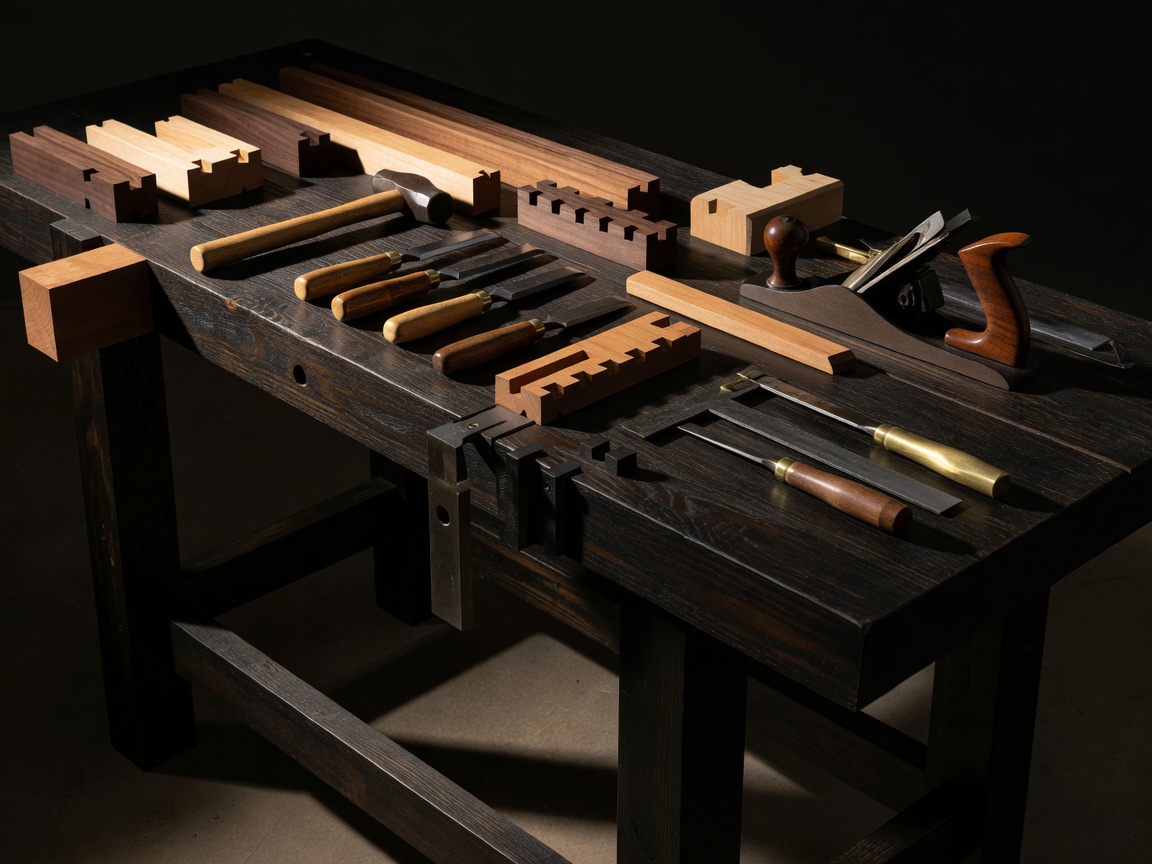
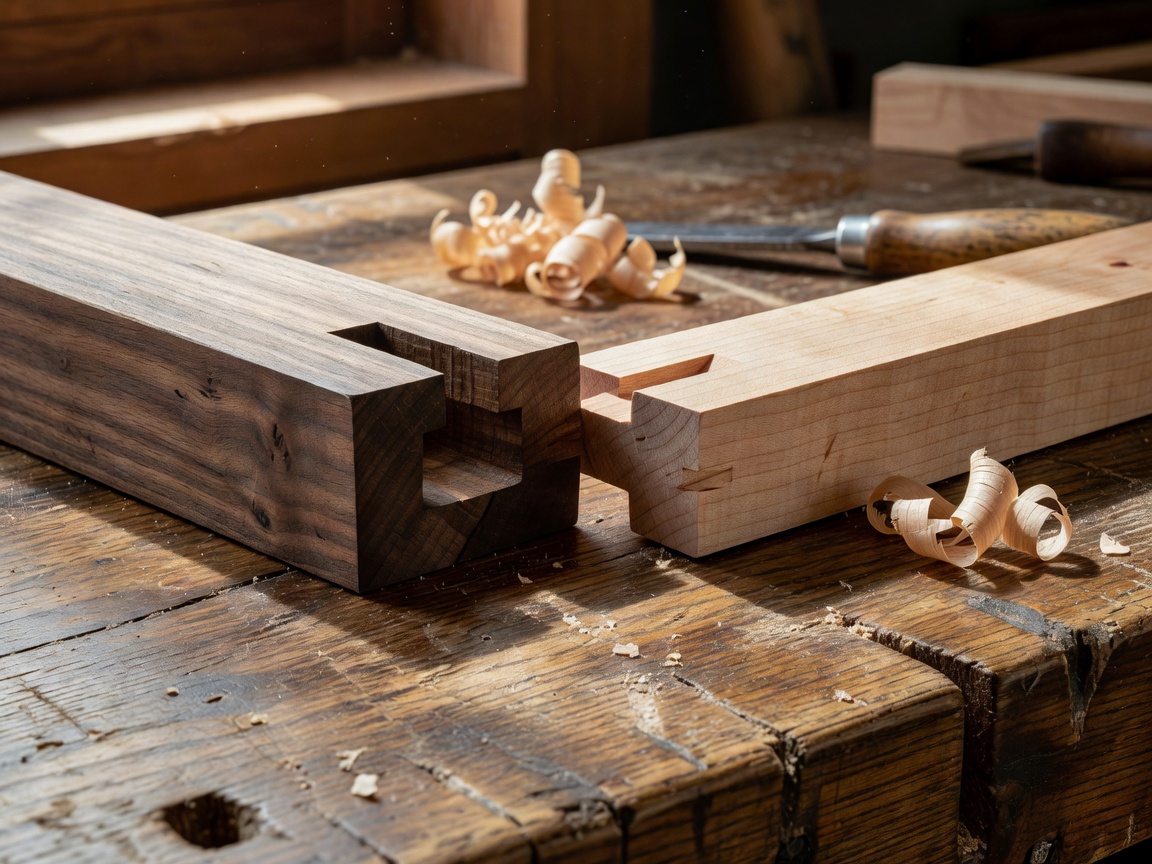
A mortise-and-tenon joint offers useful bearing and glue surfaces when proportioned and made appropriately. A bolted knock-down connection can support repeatable assembly and service access. Neither label settles the question alone. Poor fit can weaken an elegant traditional joint; a well-designed mechanical connection may be entirely suitable for a heavy table that must eventually leave the room. Ask how the joint is prevented from loosening and how it can be inspected.
Engineered wood and metal can also perform important roles. Plywood’s cross-laminated arrangement changes its dimensional behaviour relative to a broad solid board. A steel subframe has different stiffness, connection and corrosion considerations from a timber chassis. Mixed-material construction calls for attention to differential movement and contact details. Avoid judging the hidden structure as though it were a collection of prestige materials: geometry and connections decide how those materials actually work.
Separate finish from structure
A finish protects and presents a surface; it does not turn an unstable assembly into a stable one. Oil, lacquer and other coating systems have different maintenance and repair characteristics. Request the exact care guidance for the specified finish, particularly around drink spills, cleaning products and changes in sheen. A maintenance instruction that merely says “use furniture polish” is not specific enough for every coating or cloth-adjacent surface.
Historic makers such as John Thurston in London and firms such as Brunswick in the United States provide useful context for changing table forms, but heritage should not substitute for inspection of a particular design. Museum collections, including the Victoria and Albert Museum’s furniture holdings, also show how veneers, carving and structural joinery can perform different roles in the same object. Read the construction, rather than assuming an antique appearance proves an antique method.
For an owner, serviceability is a practical expression of craftsmanship. Rails eventually need attention, cloth wears and a room may change use. A clear assembly record, accessible connections and a sensible dismantling plan protect the table more effectively than mystique. Do not tighten every visible bolt indiscriminately: fastener sequence and torque should follow the maker’s instructions. The goal is a frame that holds its line while remaining understandable to the people who will care for it.
Sources and further reading
- USDA Forest Products Laboratory: Wood Handbook
- Victoria and Albert Museum: furniture collection
- Brunswick Billiards: maker context
- Thurston: maker context
Historical and manufacturer references are context, not endorsements or comparative test results.